Quick answer
- Silicon-carbon (Si/C) composite anodes are replacing traditional pure graphite in flagship smartphone batteries, breaking through the multi-year 5,000 mAh glass ceiling to deliver 6,000 to 7,000+ mAh in devices under 9mm thickness.
- Silicon holds a theoretical electrochemical capacity of roughly 4,200 mAh/g—over ten times that of graphite (372 mAh/g). By embedding nano-silicon particles inside an elastic porous carbon matrix, battery engineers have overcome the catastrophic 300% volumetric expansion that previously caused silicon anodes to crack.
- Current commercial implementations blend between 6% and 15% silicon content into the anode, yielding volumetric energy density increases of 15% to 25% without sacrificing safety.
- Cycle longevity standards match or exceed conventional lithium-ion batteries: most commercial Si/C cells retain 80% original capacity after 1,600 full charge cycles, while maintaining superior discharge voltage stability in cold temperatures.
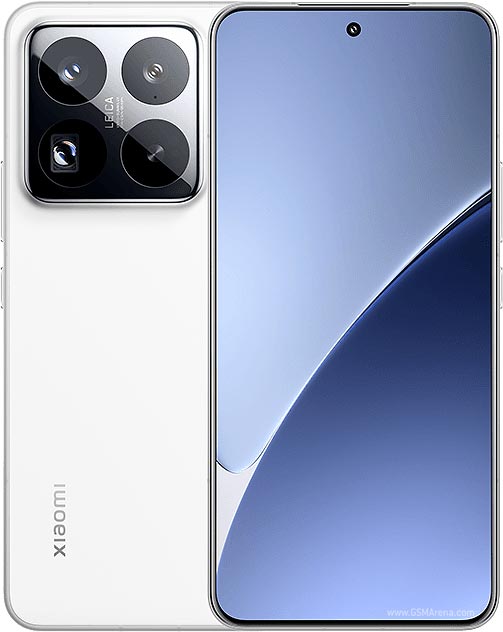 Image source: GSMArena Xiaomi 15 Pro Specifications / Xiaomi Official
For nearly a decade, smartphone battery progress appeared stagnant. While display resolutions jumped to 1.5K and chipsets transitioned from 14nm to 3nm, flagship phone battery capacities remained anchored at 4,500 to 5,000 mAh. Fitting larger batteries required making phones uncomfortably thick or heavy.
That physical ceiling has dissolved. Leading manufacturers—including Honor (Qinghai Lake battery), Xiaomi (Jinshajiang battery), Vivo (BlueOcean battery), and OnePlus (Glacier battery)—are shipping slim, lightweight phones boasting 6,000 mAh to 7,050 mAh capacities.
The technology enabling this leap is the Silicon-Carbon (Si/C) composite anode. Here is the chemical, mechanical, and practical reality of how this battery revolution works.
The chemistry: Why graphite hit a wall
In a conventional lithium-ion battery, the positive cathode (typically Lithium Cobalt Oxide or NMC) releases lithium ions during charging, which travel through an electrolyte solution to intercalate into the negative anode.
For over thirty years, the industry relied almost exclusively on graphite as the anode material:
- Graphite Intercalation: Six carbon atoms in a hexagonal honeycomb lattice hold one lithium ion ($LiC_6$).
- Theoretical Capacity Ceiling: This crystal structure imposes an unyielding physical limit: theoretical specific capacity is capped at 372 mAh/g.
- Practical Limits: After decades of industrial refinement, modern graphite anodes operate at roughly 350 to 360 mAh/g (over 95% of theoretical capacity). There was simply no chemical room left to extract more energy from graphite.
Silicon offered the obvious alternative. Instead of merely storing ions between carbon layers, silicon atoms alloy directly with lithium ($Li_{15}Si_4$ or $Li_{22}Si_5$):
- Silicon Theoretical Capacity: Up to 4,200 mAh/g—more than ten times the capacity of graphite.
If pure silicon is so chemically superior, why did it take until the mid-2020s to appear in commercial smartphone batteries?
The 300% expansion problem and the carbon matrix solution
The barrier to silicon was mechanical pulverization.
When a pure silicon anode absorbs lithium ions during a full charge cycle, its physical volume expands by up to 300%. When the battery discharges, it contracts back to its original size:
- Particle Pulverization: Repeated expansion and contraction creates immense internal mechanical stress. Pure silicon particles crack, fragment, and lose electrical contact with the current collector.
- SEI Layer Destruction: Each expansion fractures the Solid Electrolyte Interphase (SEI) protective layer on the anode surface. The electrolyte constantly reacts with freshly exposed silicon to rebuild the SEI, consuming active lithium and rapidly degrading battery capacity within fewer than 100 cycles.
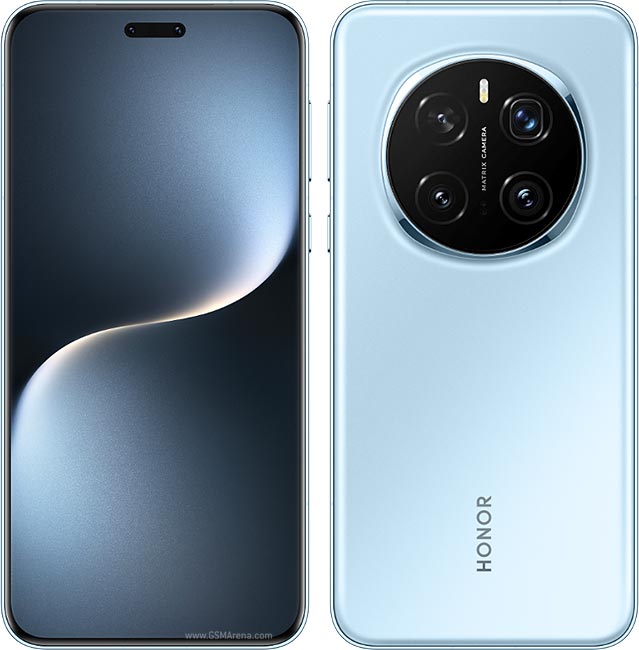 Image source: GSMArena Device Showcase / Honor Official
The Breakthrough: Nano-Silicon and Porous Carbon Scaffolding
Material scientists solved this mechanical crisis through nano-engineering:
- Porous Carbon Cage: Instead of solid silicon sheets, engineers fabricate a highly conductive, porous carbon scaffolding.
- Nano-Silicon Deposition: Silicon is deposited inside the microscopic pores as nano-clusters (under 100 nanometers in diameter).
- Expansion Buffer: When the nano-silicon particles expand during charging, they swell into the internal void spaces of the porous carbon cage without increasing the outer dimensions of the anode or cracking the external SEI film.
Current commercial smartphone batteries do not use 100% silicon; they incorporate a hybrid blend containing 6% to 15% silicon content, with the remainder composed of synthetic graphite. This hybrid approach delivers an instant 15% to 25% increase in total volumetric energy density while preserving cycle life.
Real-world benefits: Cold weather and charging curves
Beyond cramming 6,000+ mAh into a slim chassis, silicon-carbon chemistry changes how batteries behave in extreme conditions:
1. Low-Temperature Discharge Stability
Traditional graphite anodes suffer from severe lithium plating and sluggish ion diffusion in sub-zero temperatures, causing phones to shut down unexpectedly at 0°C or -10°C. Silicon-carbon anodes feature superior electrochemical kinetics, retaining up to 80% usable capacity at -20°C.
2. Fast-Charging Heat Curves
Because silicon-carbon cells achieve higher energy density, battery packs often divide into dual-cell configurations (two 3,000+ mAh cells in series). This enables 80W to 120W fast charging while keeping individual cell voltages within optimal thermal boundaries.
The table below contrasts conventional graphite against commercial silicon-carbon batteries.
| Metric | Traditional Graphite Anode | Modern Silicon-Carbon (Si/C) Anode |
|---|---|---|
| Active Anode Material | Pure Synthetic Graphite | Porous Carbon + 6-15% Nano-Silicon |
| Anode Specific Capacity | ~355 – 360 mAh/g | ~450 – 600+ mAh/g (Blended) |
| Volumetric Energy Density | ~650 – 700 Wh/L | ~780 – 850+ Wh/L |
| Typical 2026 Capacity (8.5mm Phone) | 4,800 – 5,000 mAh | 6,000 – 7,050 mAh |
| Cycle Life to 80% Capacity | 800 – 1,200 Cycles | 1,400 – 1,600 Cycles |
| Low Temp Efficiency (-10°C) | ~50% to 60% Capacity | ~75% to 82% Capacity |
Environmental durability and long-term lifespan
A frequent question regarding novel battery chemistry is cycle degradation: Does a 6,500 mAh battery die faster than an older 5,000 mAh battery?
Automated testing data indicates the opposite. Modern Si/C batteries incorporate in-situ pre-lithiation techniques (replenishing active lithium lost during initial SEI formation) and high-elasticity polymeric binders. Most commercial manufacturers now guarantee 1,600 complete cycles before reaching the 80% health threshold—roughly 4 to 5 years of daily full recharges.
Furthermore, because a 6,500 mAh phone often finishes a heavy day with 35% to 45% remaining charge, users undergo fewer full charge cycles per year, fundamentally extending the calendar lifespan of the handset.
Summary
The mainstream adoption of silicon-carbon batteries represents one of the most consequential hardware upgrades in modern consumer electronics. By resolving the physical expansion of silicon with porous nano-carbon engineering, smartphones have achieved multi-day autonomy without sacrificing ergonomics.
As silicon doping percentages increase toward 20% over the coming years, battery anxiety will increasingly become a relic of previous mobile generations.
Sources and further reading
- Journal of The Electrochemical Society, "Mechanisms of Silicon Anode Degradation and Nano-Carbon Matrix Solutions", Electrochemical Research Series.
- Honor Device Co., Qinghai Lake Battery Chemistry and Low-Temperature Discharge Whitepaper.
- Xiaomi Corporation, Jinshajiang High-Density Battery Architecture and Pre-Lithiation Technical Documentation.
- Nature Energy, "Silicon-Based Anodes for Next-Generation Lithium-Ion Batteries: Challenges and Commercial Advances".