Quick answer
- Qualcomm's Snapdragon 8 Elite adopts custom Oryon CPU cores running up to 4.32 GHz, delivering dominant single-core performance and exceptional emulation speed.
- MediaTek's Dimensity 9400 doubles down on an "All-Big-Core" ARM Cortex-X925 architecture, matching multi-threaded throughput while drawing slightly less peak power during sustained productivity workloads.
- For GPU rendering and hardware ray tracing, Qualcomm's sliced Adreno 830 GPU and MediaTek's Immortalis-G925 compete neck-and-neck, but Qualcomm holds broader developer optimization in Western emulator and gaming ecosystems.
- If your priority is raw emulation throughput and desk docking driver maturity, choose Snapdragon 8 Elite; if your priority is sustained multi-tasking thermal stability in slim phone bodies, the Dimensity 9400 offers outstanding value.
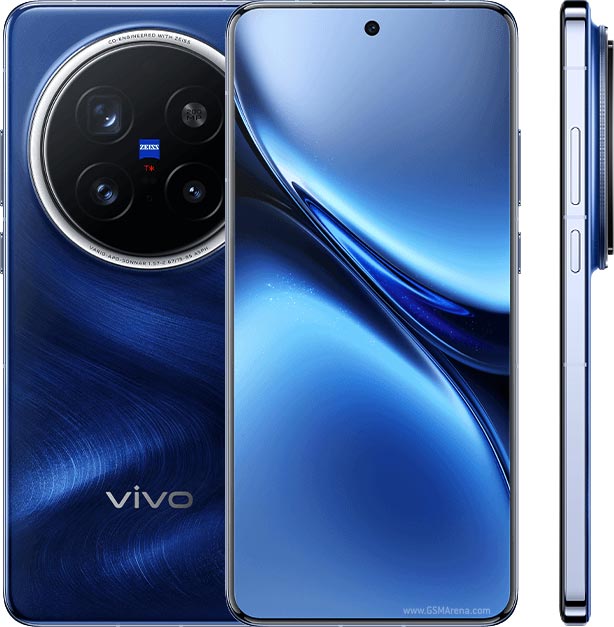 Image source: GSMArena Device Database / Vivo Official
The flagship smartphone landscape has reached an unprecedented competitive peak. For the first time in years, Qualcomm and MediaTek have abandoned efficiency cores entirely, moving to radical custom silicon designs manufactured on TSMC's state-of-the-art 3nm (N3E) lithography process.
For power users, mobile gamers, and desk setup enthusiasts, understanding how these silicon platforms behave under sustained thermal stress determines which flagship handset to purchase. Here is a direct architectural breakdown.
CPU design: Custom Oryon versus All-Big-Core
The philosophical divergence between Qualcomm and MediaTek is stark:
Qualcomm Snapdragon 8 Elite
Qualcomm has retired ARM's stock Cortex CPU designs in its top tier, bringing its custom Oryon architecture (originally developed for Snapdragon X PC chips) to mobile:
- Core Configuration: 2x "Prime" Oryon cores clocked at an astonishing 4.32 GHz + 6x "Performance" Oryon cores clocked at 3.53 GHz.
- Cache Architecture: An enormous 24 MB of total L2 cache (12 MB dedicated to the prime cluster, 12 MB to performance cores).
- Behavioral Characteristic: Incredible burst responsiveness and industry-leading single-threaded benchmark scores (surpassing 3,100 points in Geekbench 6), making web app rendering and complex scripts feel instantaneous.
MediaTek Dimensity 9400
MediaTek continues its bold All-Big-Core strategy in partnership with ARM:
- Core Configuration: 1x Cortex-X925 super core at 3.63 GHz + 3x Cortex-X4 cores at 3.3 GHz + 4x Cortex-A720 performance cores at 2.4 GHz.
- Cache Architecture: 12 MB L3 cache combined with 10 MB system level cache (SLC).
- Behavioral Characteristic: Because MediaTek does not push clock speeds past the 4.0 GHz thermal barrier, its multi-core efficiency curve is remarkably flat. For background compression, local AI token processing, and video transcoding, it maintains high throughput with modest battery consumption.
GPU and thermal throttle characteristics
When connected to an external 4K monitor or stressed with AAA mobile titles, thermal dissipation defines frame stability.
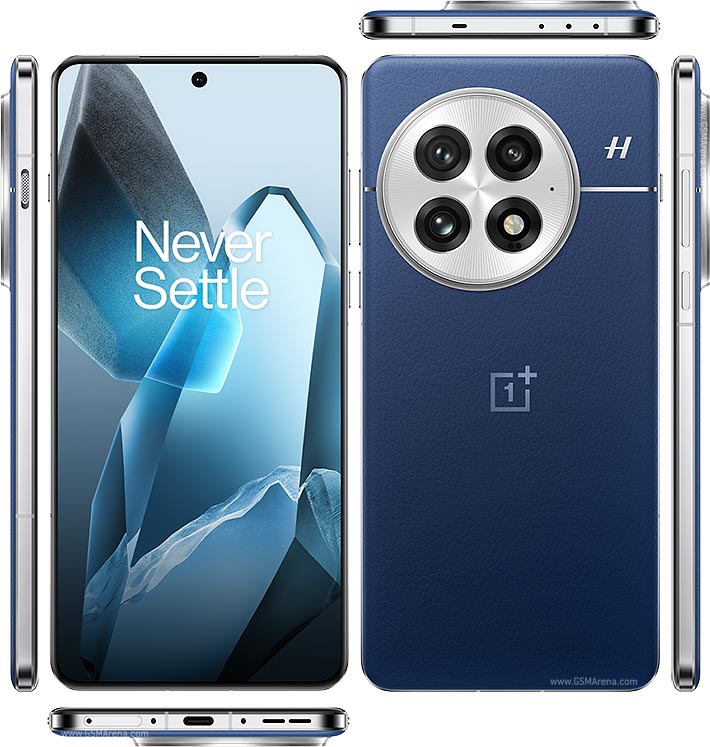 Image source: GSMArena OnePlus 13 Gallery / OnePlus Official
Graphics Architecture
- Adreno 830 (Qualcomm): Features a revolutionary sliced architecture where three independent GPU slices operate at 1.1 GHz, supported by 12 MB dedicated graphics memory. It supports Unreal Engine 5.3 Chaos physics and hardware Lumen illumination.
- Immortalis-G925 (MediaTek): Features 12 core shader execution units, claiming a 40% improvement in ray tracing performance over the previous generation.
Sustained Thermal Behavior
In uncooled, passive aluminum/glass smartphones (such as standard flagships without internal fans):
- The Snapdragon 8 Elite delivers higher peak burst frame rates, but if a phone's chassis cannot dissipate 12 to 14 Watts of peak SoC power, internal thermal management will throttle clocks after 12 minutes to roughly 65% to 70% of peak capability.
- The Dimensity 9400 peaks slightly lower in total power draw (typically capping near 10 to 11 Watts), allowing passive devices (like the Vivo X200 series) to sustain around 75% to 80% stability over a continuous 30-minute stress cycle.
The table below summarizes the key architectural metrics between both platforms.
| Specification / Metric | Qualcomm Snapdragon 8 Elite | MediaTek Dimensity 9400 |
|---|---|---|
| Fabrication Node | TSMC 3nm (N3E) | TSMC 3nm (N3E) |
| CPU Architecture | 2x Oryon Prime (4.32 GHz) + 6x Oryon (3.53 GHz) | 1x Cortex-X925 (3.63 GHz) + 3x X4 + 4x A720 |
| Efficiency Cores | None (0 Cores) | None (0 Cores) |
| GPU Engine | Adreno 830 (Sliced Architecture) | Immortalis-G925 MC12 |
| NPU / AI Engine | Hexagon NPU (Up to 45% faster INT4/FP16) | MediaTek NPU 890 (Diffusion & LoRA on-device) |
| RAM Support | LPDDR5X up to 5,300 MHz (10.6 Gbps) | LPDDR5X up to 5,340 MHz (10.68 Gbps) |
| Storage Standard | UFS 4.0 | UFS 4.0 (Slim 4-channel support) |
| Display Support | 4K @ 60Hz / QHD+ @ 144Hz | WQXGA @ 180Hz / 4K @ 120Hz |
Modem and peripheral connectivity
Both chipsets incorporate state-of-the-art wireless radios:
- Qualcomm Snapdragon X80 5G: Delivers dedicated AI-driven mmWave beamforming and 6x carrier aggregation with Wi-Fi 7 (FastConnect 7900) integrating Bluetooth and UWB onto a single 6nm die.
- MediaTek MediaTek 5G UltraSave: Incorporates sub-6GHz 4CC carrier aggregation and quad-band Wi-Fi 7 with tri-band concurrency.
Summary verdict
Neither chip is a compromise. If your mobile lifestyle involves running virtual machines, Linux terminals, Nintendo Switch / PC emulation, and multi-monitor USB-C docking hubs, Qualcomm's Snapdragon 8 Elite benefits from wider driver maturity and higher clock headroom.
If you prioritize extended battery longevity under daily multi-tasking, continuous 4K video recording, and cooler operation in slim flagship camera phones, MediaTek's Dimensity 9400 represents a triumphant engineering achievement.
Sources and further reading
- Qualcomm Technologies, Snapdragon 8 Elite Technical Product Specifications (October 2024).
- MediaTek Inc., Dimensity 9400 Platform Architecture and Technical Whitepaper (October 2024).
- TSMC (Taiwan Semiconductor Manufacturing Company), 3nm Process Technology N3E Characteristics Overview.